Technical partner for founders

Get your software
product live.

Zorentia Office is your pre-launch CTO. We take what you have today and get it into the hands of real customers.

Where you are today

  • Just an idea
  • Built with AI
  • Half-built
  • With a team

Where we get you

  • A working product
  • Deployed
  • Usable
  • In customers’ hands.

We work directly with the people already building your product.

We make the technical decisions. Your team keeps building.

Keep your developer, your agency, your internal team, your AI workflow. We don't replace them. We tell them what to build, in what order, and why.

You run the business. Customers, margins, market, where the company is headed. That's yours.

We run the technical calls. What gets built first. How the system is structured. What belongs in the first release. What's blocking launch.

Those calls get made either way. If nobody owns them on purpose, your developer starts shaping the product by accident. Your agency's architecture becomes your architecture. Your AI tool builds whatever it's told. You end up refereeing technical opinions you don't have the context to judge.

"My developer already makes these decisions. So does my AI. Why do I need you?"

Because right now, nobody is deciding for your business. They're deciding for their own job.

Every build runs on hundreds of small technical calls: what to build first, how to structure the system, what a change quietly breaks somewhere else. Those get decided whether or not anyone is responsible for getting them right.

Your developer decides to keep the code working. That's the job. It was never to protect a business plan they don't have visibility into.

Your AI tool decides by matching whatever it's told. No memory of last week's call. No view of your margins. No way to say "wrong move, here's why." It executes. It doesn't decide.

So the decisions are already happening. They're just not pointed at your business.

That's the job we do.

Tell us what the business needs. We turn it into the calls your team builds from.

Several good paths forward: we pick the one that fits your company now. You add a feature: we place it in the system. One change threatens another: we catch it before it ships. Your developer needs a decision: we make it. Someone proposes more than you need: we cut it.
Most threats to a launch don't look like mistakes. They look like good ideas at the wrong time.

We tell you when to say no:

A feature that would help. A rebuild that would help. A hire that would help. Each one sounds reasonable on its own. None of them are free, and stacked together, they're how a product stays "almost finished" for a year.

  1. Don't add that feature yet.
  2. Don't change scope mid-build.
  3. Don't rebuild this now.
  4. Don't hire before you need to.
  5. Don't solve a scale problem you don't have.
  6. Don't move on until this piece is actually done.

"I could say no to these myself."

You could. But look at where the yes comes from. Your developer wants to build the more interesting version. You want the feature that might land the next customer. Everyone in the room has a reason to add something. Nobody in the room is paid to protect what's already been decided.

That's the gap. Once your developer starts on an agreed milestone, we hold that scope until it ships, unless something in the business genuinely changes. Not because change is bad, because a milestone that keeps moving never finishes, and you end up paying for the same work twice.

You don't need to build everything you can imagine. You need to build what gets your product into the market. Every "not yet" is in service of that.

Inside an Office Hour

An Office Hour isn't a one-off call. It runs every two weeks while your product is being built, and each one does the same four things: check what was supposed to ship, confirm it actually works, decide what's next, and issue the next Implementation Directive.

How the cycle moves

We don't move to the next piece of work just because two weeks have passed.

We move on when the current milestone is actually complete, or when we deliberately change it because something real in the business has changed.

Otherwise, a build turns into an open-ended stream of work with no point where anyone can say what's actually done.

You don't start over each time. Office carries your Project Memory, what the product is, what's changed, what's already been decided and why. If something comes up between sessions, a customer call, a new file, a change of plan, you send it through Tell Office and it's already sitting in the record before we talk again.

So the session itself stays short. We're not spending it getting up to speed. We're spending it on the one thing that actually needs a decision.

What you leave with

Not notes from a conversation. A directive: the next milestone, what's in scope, what's excluded, and what "done" looks like, ready to hand to your developer, agency, or AI tool.

Review. Decide. Build. Advance. Then we do it again in two weeks.

What you get after every session

Implementation Directive

After every Office Hour, you receive written instructions you can hand straight to your developer, agency, or AI tool. They explain the next piece of work, what is included, what can wait, and how everyone will know when it is finished.

Common Table / Office sessionsZorentia Office

Workspace / Sessions

Office sessions

Published

Latest directive

Shared data before features

Reference
OH-0003
Date
22 July 2026
Release
First usable release

Recommended next step

Approve the shared household data and access contract before building the meal-planning flow.

Included scope

  • Household, member and invitation records
  • Owner and member permissions
  • Invitation lifecycle and expiry rules
  • Cross-household access protections

Implementation order

  1. 01

    Write the household ownership and permission matrix.

  2. 02

    Model invitation acceptance and membership removal.

  3. 03

    Prove isolation with two-household access fixtures.

Current state & diagnosis

Current state

The prototype stores meal plans and grocery items against one local user, while the validated product promise now depends on several people sharing one household record.

Diagnosis

Building the meal-planning screens on the single-user model would bury the core collaboration rules inside feature code. Household ownership and access must become the implementation contract first.

Deliberate exclusions

Recipe discovery marketplace · Nutrition and calorie tracking · Pantry prediction and stock levels

Between Office Hours

Between sessions, you send updates through Tell Office: a new idea, a changed priority, a customer discovery, or a decision you've made on your own.

Each update is stored in your Project Memory as your version of it: what you want and why. From there, it's placed into your Build Plan at the point in the current implementation timeline where it actually fits.

So two things happen when you send something through. It's recorded. And you can see where it now sits in the build.

Your next Office Hour works from that same Memory and Plan: the technical decisions for the current phase, plus everything you added since the last session. Nothing needs to be re-explained. It's already there.

01Send an update

Tell Office what changed.

Between sessions, send a new idea, changed priority, customer discovery, file, or decision through Tell Office. Add what you want and why, in your own words.

Founder update captured with its original context
Common Table / Tell OfficeZorentia Office

Workspace / Update

Tell Office

Saved
Type Voice File

Customer interview synthesis

Ready to send
common-table-interview-synthesis-v3.pdf286 KB · Attached today, 2:12 pm

Office updated the record

Project Memory v3

Core promise, household roles and first-release boundaries rewritten from the interview evidence.

Revised
5 sections revised
Written
Today, 2:18 PM
02Project Memory

Your update becomes part of the project record.

Office stores the update in Project Memory alongside your previous decisions, source files, and session history. What changed, and your reason for changing it, stays available for the next review.

Update recorded in Project Memory
Common Table / Project memoryZorentia Office

Workspace / Memory

Project memory

Version 3

Common Table

Common Table helps busy shared households agree on dinner and turn a week of meals into one grocery list everyone can use.

Updated today, 2:18 PM · Updated from common-table-interview-synthesis-v3.pdf

Product Promise

Common Table replaces the group-chat scramble around dinner with one calm weekly plan. A household chooses its meals together, and the product turns those choices into a grocery list without duplicate ingredients.

The first product promise is coordination: everyone sees the same plan, knows what still needs buying, and can update the list while someone is already at the shops.

03Build Plan

See where it fits in the build.

Office places the update into the Build Plan at the point where it belongs in the current implementation timeline. You can see whether it affects the work happening now, comes next, or waits until later. Your next Office Hour starts from this updated Memory and Plan.

Update positioned in the implementation timeline
Common Table / Build planZorentia Office

Workspace / Plan

Build plan

32% complete

First usable release

Stage 01 of 4 · 32% complete

  1. In progress

    Shared Household Foundation

    Objective

    Define the household, membership and invitation rules before meal planning or grocery-list implementation begins.

    Implementation

    1. 01

      Define household, member and invitation records with explicit ownership.

    2. 02

      Document what owners and members can view, create, edit and remove.

    3. 03

      Specify invitation expiry, acceptance and existing-account behaviour.

    Complete when

    • Members cannot read or change another household’s records.
    • An accepted invitation creates exactly one membership.
  2. Meal Plan & Recipe Capture

    Planned
  3. Consolidated Grocery List

    Planned

You don't get locked out of your own product

Most non-technical founders don't set up their own repositories, cloud infrastructure, or domain. Whoever's building the product does, because they're the one who needs it working today. That's normal. It's also how a founder ends up locked out of their own product later, dependent on whoever holds the account to give them access.

During Office Hours, we work out who should hold each one. Where something hasn't been created yet, you create it under your own accounts and grant access to whoever's building, your developer, your agency, whoever's at the keyboard. Where something already exists under someone else's account, we work to get ownership transferred back to you.

So by the time you launch, you're not left asking who has access to what. Your repositories, your domain, your infrastructure, your accounts, they're already yours, either because you created them that way from the start or because we got them back.

You understand your product better every session

The directive tells you what's being built. The session is where you find out why.

Why this comes before that. Why a feature you asked for isn't in this milestone. Why your developer's suggested shortcut got turned down, or why it actually made sense.

One of these on its own teaches you about one decision. But you're in this conversation every two weeks, for as long as it takes to get to launch, and it's never the same decision twice. Structuring data before building on it. Weighing a shortcut against what it costs later. Deciding what a feature actually needs versus what would be nice. Session after session, you're not memorizing answers, you're absorbing how a technical call gets made at all.

That's what you're actually building: not the ability to judge this milestone, but the ability to lead a technology company without being a passenger inside it. You still won't write the code. But you'll know what you're looking at, you'll know what to ask when someone proposes a change, and you won't be dependent on any one developer, agency, or collaborator to explain your own company back to you.

Why Zorentia exists

More people can build software companies than ever, hire developers anywhere, work with agencies, use AI to generate working code. That's a good thing.

But making software easier to produce shouldn't make the technology inside your company harder for you to understand or control. That's the belief behind everything above.

It's also why Zorentia is two things, not one.

Build Studio is for founders who want to work through that process themselves, step by step.

Office is for founders who'd rather have someone else make the technical calls, while keeping them inside the decisions that matter.

Different amounts of involvement, same belief: you should be able to lead the company you own, not watch someone else run the technical half of it.

This is for you if

01Software matters to how your business works.

02Your product hasn't launched yet.

03You're prepared to invest in getting it built properly.

04You want it in the market, not built indefinitely.

What you might be building
SaaS and web applicationsAI and mobile productsMarketplaces and customer portals

The person making the technical calls has done the work.

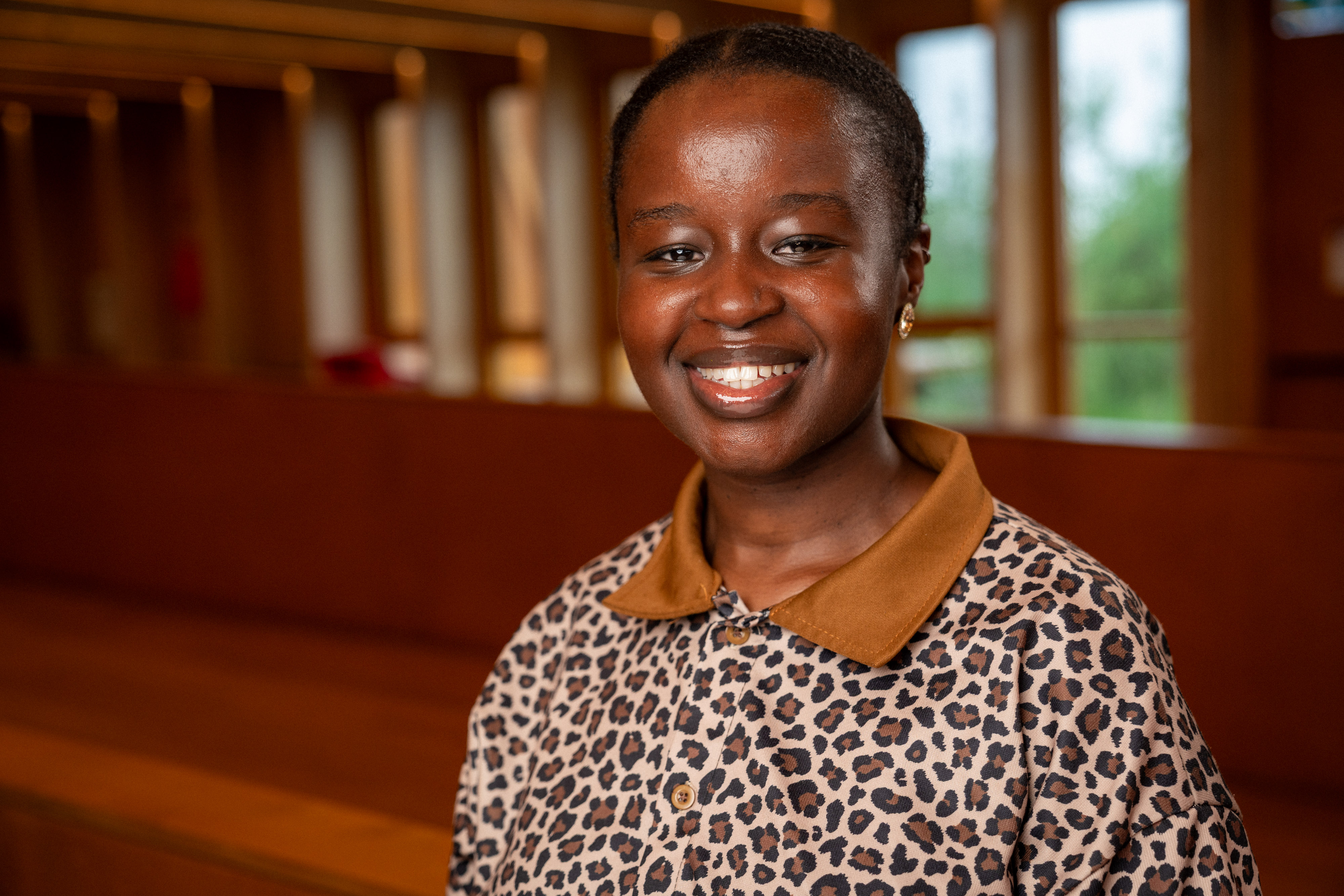
Mercy Nekesa, founder of Zorentia and technical expert leading Zorentia Office Hours

Mercy Nekesa Computer scientist Founder, Zorentia

Zorentia Office is led by Mercy Nekesa. Computer scientist, founder and software builder.

Her experience spans building companies from zero, shipping and operating production software, working with founders, teaching software teams, and formal computer science training across Australia and the United States.

Founded, built and grew a technology company to 7,000+ active users

More than 7,000 active users ran on infrastructure she designed, deployed and operated.

That included AWS infrastructure, data architecture, mobile payments and the day-to-day operation of a live production system.

She has not only built software. She has been responsible for keeping it working while a real company depended on it.

Built two technology companies from zero

Raining Vegetables in Uganda. Zorentia in Sydney. Both built from a blank page into real software products.

Mercy wrote and shipped the software behind both companies herself. When she is making decisions about your build, she has already carried that responsibility from idea through production.

Macquarie University

Expert in Residence at Macquarie University. Zorentia is also an institutional customer of the university.

Mercy works with founders inside the Macquarie University innovation ecosystem, while Zorentia itself has gone through the process of becoming a technology provider to the institution.

UNSW New Wave winner. Westpac innovation grant recipient.

Winner of UNSW New Wave 2025 and recipient of a Westpac innovation grant.

Zorentia has been presented, assessed and backed through major Australian university and industry programs.

Awarded across Africa, Europe and Australia

  • UNSW New Wave winner and Westpac innovation grant recipient, Australia.
  • Best Female Entrepreneur, DFCU Bank, Uganda.
  • Best Agri-Business, Generation Food Award, Rikolto, Belgium.

Her work also included delivery with organisations including the Rabo Foundation and NARO, turning external requirements into software that had to work in the real world.

Taught 200+ students. Supervised 50+ teams to an MVP.

More than 200 university students taught and more than 50 teams supervised through building and shipping an MVP.

That experience matters inside Zorentia Office for a simple reason: making the right technical decision is only half the job.

You also need to be able to explain it clearly enough for a founder to understand it and for the person building the product to act on it.

Master of Science in Computer Science

University of New South Wales, Sydney, Australia.

Grad school in computer science followed years of building and operating software in the real world.

Bachelor of Science in Computer Science

The State University of New York at Buffalo, USA.

Four years of computer science in the USA, alongside engineering experience with startups across Boston and Baltimore, secure financial systems at ETS in Washington D.C., and NSF-funded research in New York.

What founders say about working with Zorentia.

“Having a technical co-pilot. A person able to translate outcomes into code. It's refreshing to hand over work and to have someone who will carry some of the burden. As a non technical solo founder it's an emotional assistance in some way.”

Nicholas WongFormer Vice President of International ProductActivision Blizzard

“Zorentia's ability to grasp the concept so quickly, in order to turn idea into MVP. A rare talent for anyone to be able to quickly apply their own technical expertise to another person's expertise/big idea.”

Kirsten HaywoodFormer Head of Corporate AffairsWestpac Group

“I found the MVP scope document… really helpful. It clearly outlined the MVP deliverables and the development process.”

Pranav ChandraStudentUniversity of Sydney

“Incredible value. I've learned things about a more technical side of life, and very much appreciated the timings, and support.”

Cally SheehanChief Dog OfficerDog Days Concierge

Let’s get your software product live.

Bring the idea, half-built product, developer questions, or AI-built code you have today.

In one Zorentia Office Hour, we’ll identify what is blocking progress, make the next technical decisions, and give your implementer clear direction to build from.

  • A clear next milestone
  • The technical decisions needed to move forward
  • An Implementation Directive your implementer can use
Book a session · A$300(opens the booking calendar in a new tab)

Start with the product exactly where it is today.